
See this video tutorial for an illustration of writing Junit tests.
Writing tests is an essential part of design and implementation. The most important skill in writing tests is to determine what to test, and then determine how to test.
Imagine you have an interface IFunctionality and you must provide its implementation ConcreteFunctionality. You must check that your ConcreteFunctionality implementation of the IFunctionality interface works as specified. However thinking about tests after you have completed the implementation is not ideal. Since you have already written your implementation, you will likely come up with tests that you already know will pass, rather than tests that should pass. Here are some recommendations on how to come up with effective test cases:
Remember: you are writing tests to verify somebody else's code, not your own.
Follow this workflow: Write interface > Write an empty implementation > Write test cases. Writing an empty implementation (all the methods are present, but empty) will ensure that referring to the implementation class in your test cases does not produce compiling errors. Fill in the implementation after writing your test cases.
Convince yourself that the code to be tested cannot be trusted, and it's up to you to find any mistakes. Often a role reversal helps: imagine the instructor was writing code for the homework (as was done on 1), and you get credit for finding mistakes in the instructor's code! Be creative: where might the gotchas be in the design, and how might someone else misunderstand or mis-implement the design?
Look at each method of the interface in isolation. Think about what behavior you expect when all inputs are correct and as expected (if you wrote the interface be sure to document its intended behavior when you are writing it!). Remember that a test passes if the expected behavior is the same as the actual behavior.
Look at each method of the interface in isolation. Think about every possibility of passing correct and incorrect parameters, and figure out how to check for whether the method behaves as expected in each situation.
Look at each method of the interface in isolation. Carefully read about its objectives, including exceptional cases. Think about how you will verify that an implementation of that method actually fulfills these objectives. How will you reproduce exceptional cases so that you can test them?
Now think about the sequences in which various methods of the interface might be called. Is there a "correct" sequence of calling them? What happens when they are called "out of sequence," and what should happen?
Remember that the best option is to catch incorrect uses of your code at compile time, such that client code that incorrectly uses your code will produce compile-time errors. This ensures that if someone uses your code incorrectly, they cannot even compile their program. The next best option is to flag incorrect uses at run time (e.g. using exceptions). This ensures that client code will produce errors when it is run, because it used your code incorrectly. The unacceptable option is to hope that everybody will read your documentation (or worse, your code), understand it, and use it accordingly---and therefore convince yourself there's no need to actually put checks in your code. Remember that if documentation is vague somebody will misinterpret it, if functionality does not consider some specific scenario somebody will produce it. Better your tests than the user.
Writing tests before writing your implementation will give you insight into what your implementation ought to do. Moreover, it will help you work through the types and visibilities of your interfaces, classes, and methods, and often just understanding that structure is a big help in understanding the problem.
Often we cannot write a complete set of tests for our code before we have started writing code, as the process of implementing a design can easily bring issues to the forefront that we did not notice or anticipate.
Proper testing is an iterative process: starting from initial examples you create an initial implementation, which might suggest additional tests, which might cause test failures, which you need to fix, which might suggest additional tests, etc. A successful set of test cases is one that tests whether your implementation adheres to your design, whether your design leaves loopholes and ambiguities that allow its incorrect usage, and whether the behavior of your implementation can be predicted in all situations. This set of test cases should compile, and upon running, should pass.
NOTE: It is far better to include tests that you know to fail, rather than comment them out or delete them. Leave a // FIXME comment next to the failing tests, explaining what you intended the test to check for, and why you think it's currently failing. At some point you clearly had a reason for writing the test case, and it would be a shame to lose that insight by deleting the test! Equally bad is commenting the test out, since it gives the misleading impression that everything is fine and all tests pass, when there are known problems remaining...
There are many kinds of tests you may wish to write:

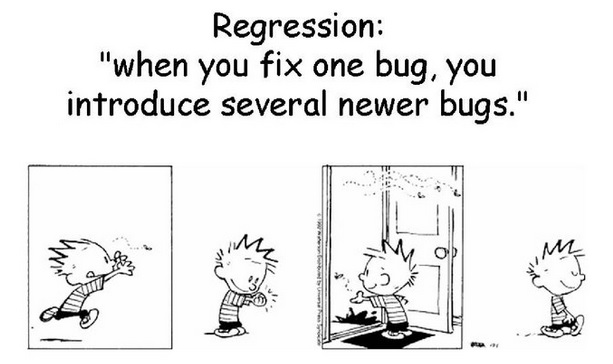
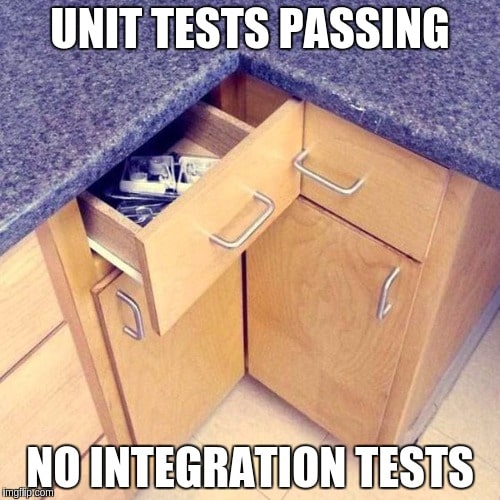
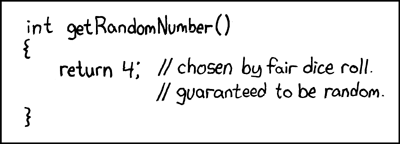
In addition, you may also wish to test the performance of your application: that some scenario completes within a certain time limit. You may find that using the timeout attribute on @Test annotations is helpful for this. (Your test method should still have some meaningful assertions in it to confirm that your code does it what is supposed to do.)
Java's package mechanisms allow for careful compartmentalizing of your code, to ensure that it neither relies upon nor modifies anything it should not have access to. This applies equally to your tests. Tests belong in a separate test/ directory. Where specific tests belong depends on their intent:
* If a test is checking for the public behavior of an interface or library, then it should **not** be placed in the same package as the code you are testing, but rather placed in the *default* package. This will ensure that your test is ''seeing" the code exactly as other client code will.

* If a test is checking for the internal behavior of a class---i.e. internal invariants, or methods that are not exposed to clients---then the test belongs in the same package as the code it is testing. Note that you should *not* make fields or helper methods `public` simply to make them easily testable: by placing the tests in the same package as the code, the tests will automatically be able to see those fields and methods, while leaving them properly encapsulated for clients.